For Beginners and People Trying Again
If you’re wondering how to start an online business with no experience, or how to try again after an earlier attempt didn’t work, this guide will help you decide what to do first. We’ll cover choosing an idea, finding customers, understanding the tools you need and taking a small, practical step towards launching.
Perhaps this feels familiar: you sit down to work on your business. An hour later, you’ve watched three videos, compared four tools and saved another article for later.
You’ve been busy. You may even have learnt something useful. But the thing you wanted to build is still waiting.
If that sounds familiar, there’s no need to beat yourself up. Starting a business online can feel like walking into a room where everyone is giving you different directions.
One person says you need a website. Another says a social media page is enough. Someone else insists you need email software, an automated sales process and a daily video schedule before you begin.
It’s a lot to take in, especially when you’re new or trying again after something hasn’t worked out.
Let’s make it more manageable. You don’t have to understand the whole internet before you can help your first customer. You need a clear starting point, a few sensible decisions and something small enough to put into practice.
1. Choose an online business idea around a real customer need
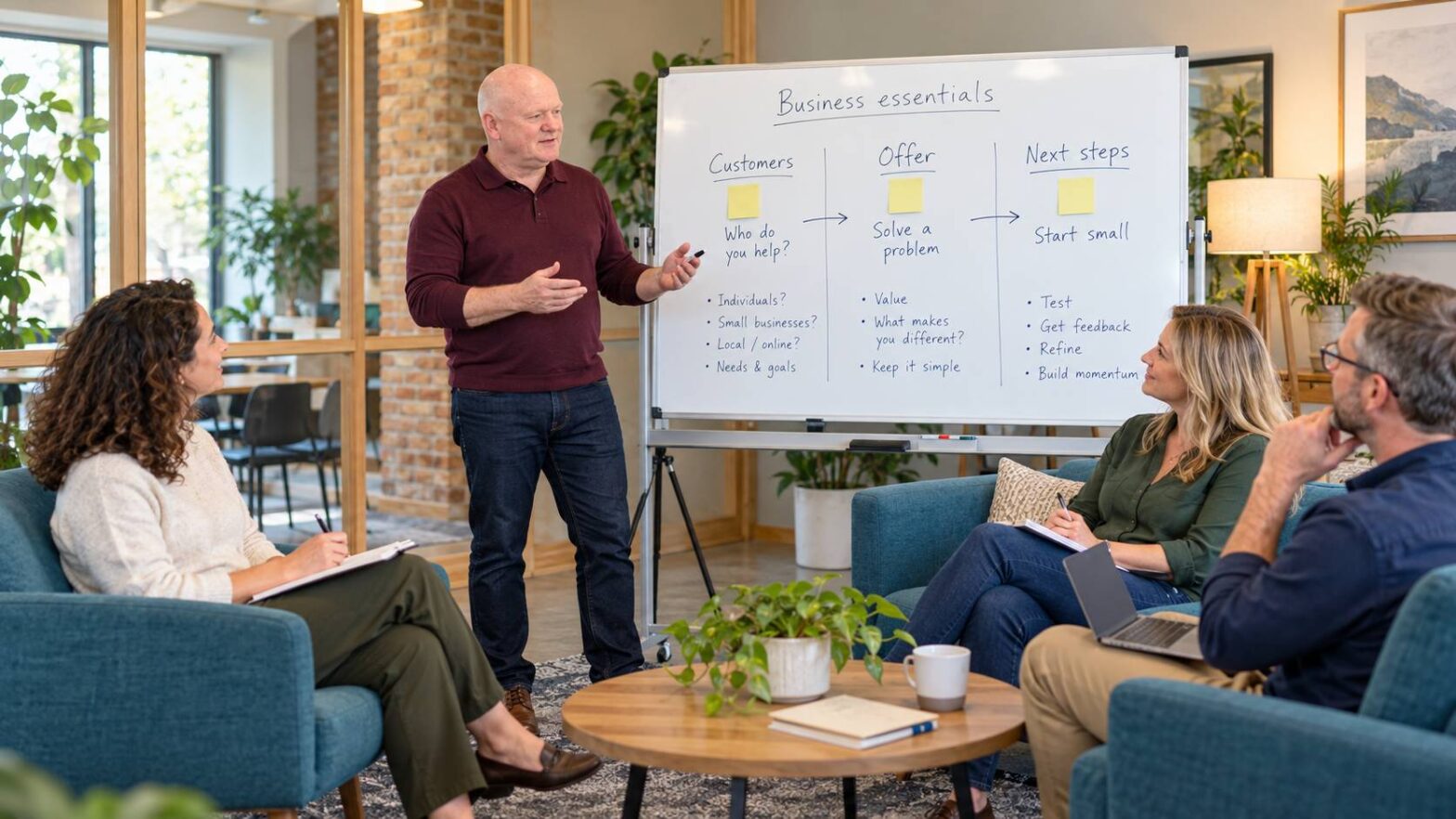
Before you choose software, ask yourself who your business is for. Starting an online business could mean selling a service, running an online shop, offering digital products or helping customers choose useful products through affiliate marketing. You can also use the internet to bring enquiries into an existing small business.
You don’t have to choose the most fashionable idea. Look for a need you understand and something you can deliver with your current skills, time and budget.
“Anyone who wants to buy” sounds like a big market, but it gives you very little to work with. A clearer answer makes your next decisions easier.
Perhaps you want to help local tradespeople organise their enquiries. Perhaps you make personalised gifts, offer bookkeeping support or help beginners build their first website.
Those businesses need different things. They don’t all need the same marketing system simply because they operate online.
Write down three answers:
- Who would I like to help?
- What problem do they need help with?
- What could I realistically offer them?
Keep the language ordinary. If you can explain your idea to a friend without giving a presentation, you’re getting somewhere.
If you’re unsure what people need, have a few conversations. Ask what they find difficult, what they’ve already tried and what a useful solution would look like. Listen before you start designing the answer.
2. Decide what your business will sell
People shouldn’t have to work hard to understand what you do.
“I provide digital solutions” could mean almost anything. “I help independent cleaners set up a simple website so customers can request a quote” gives someone a much clearer picture.
A useful first offer explains who it helps, what they receive and what happens next.
It also needs to be something you can deliver reliably. A modest service you can carry out well is a sounder starting point than a grand promise you’re still trying to figure out.
For example, if you’re offering a service, decide what’s included, what it costs, how long it takes and what you need from the customer. If you’re selling a product, explain what it does, how delivery works and how customers can get help.
These details may feel less exciting than choosing a logo. They do far more to make your business ready for a real enquiry.
3. Work out what tools you need to start an online business
It’s easy to collect subscriptions while you’re still deciding what your business will be.
A website builder here. An email platform there. A design tool, a scheduling app and something that promises to automate everything.
Each purchase feels like a step forward. Together, they can become another pile of things to learn and pay for.
Before adding a tool, ask:
“What job will this do in my business right now?”
If you can’t answer clearly, you may be able to leave it until later.
Your early setup will usually need to cover a few practical jobs:
- Explain your offer somewhere customers can find it.
- Give people a dependable way to contact you.
- Take payment when you’re ready to sell.
- Deliver what you’ve promised.
- Keep track of income, expenses and customer work.
- Protect accounts and important business information.
The right tools depend on how you operate. An appointment-based service may benefit from a booking system. A shop needs a suitable way to manage orders. A business that sends newsletters needs email software and a proper subscription process.
Start with the jobs. Choose the tools to match them.
For example, a domain name is your website’s address. Web hosting provides the space where your website lives; some website builders include it in their subscription. Email marketing software manages subscribers and sends newsletters. A payment service lets customers pay you.
You may not need every one of these on day one. Check what a service already includes before paying for another tool that does the same job. Compare the renewal price as well as the introductory offer, and check whether you can export your information if you later decide to move.
4. Create a simple website or sales page that works
Your first version doesn’t have to contain every idea you’ve ever had.
For some businesses, a straightforward page describing one service and a clear way to enquire is enough to begin testing interest. Others need a working shop, a portfolio or a booking process.
The question is: what does a customer need to understand your offer and take the next step?
Build that first.
Check it on your phone. Read the wording aloud. Test the contact method. If you’re taking payments, check the buying process and make sure you can fulfil the order.
Starting small still means taking care with the essentials. Accurate descriptions, secure accounts, clear prices and relevant customer terms matter from the beginning. Depending on your business and location, you may also need to check registration, tax, privacy or licensing requirements.
You can improve the design as you go. Customers need a business that works.
5. Learn the skills you need for your next step
There’s nothing wrong with training. The difficulty comes when every lesson creates another reason to postpone starting.
Try giving your learning a specific purpose.
If today’s task is to publish your service page, learn how to create that page. If customers aren’t understanding your offer, work on explaining it. If you’re ready to send a newsletter, learn how to set up subscriptions and send it properly.
Then use what you’ve learnt before moving to another subject.
A useful habit is to finish each learning session with a small piece of work: a paragraph written, a page published, a process checked or a customer question answered.
You’ll still have things to learn. You’ll also have something to show for the time you spend.
6. Find your first potential customers online
You don’t need to launch a blog, a video channel and five social accounts in the same week.
Choose a starting point that suits your customers and the time you have available.
That might mean useful posts in a place your audience already visits, articles answering questions they search for, introductions through your existing contacts or a small number of thoughtful conversations with potential customers.
Respect community rules and people’s inboxes. Being helpful and relevant gives people a reason to pay attention.
Paid advertising is another option, but it introduces costs and extra decisions. Before spending, make sure your offer and page are ready, decide what you’re trying to learn and set a budget you can afford to lose during testing.
Whichever route you choose, give it a manageable routine. Two useful pieces of work you can repeat each week are more valuable than an ambitious schedule you abandon after three days.
7. Use customer feedback to improve your business
Once people see your offer, pay attention to what happens.
Do they understand it? Do they ask about the price, delivery or what’s included? Do they enquire but then stop responding?
Those questions can show you what to improve.
If nobody buys immediately, that doesn’t tell you everything. Perhaps too few suitable people have seen the offer. Perhaps the wording is unclear. Perhaps the offer itself needs more work.
Avoid changing everything at once. Pick one likely issue, make a sensible adjustment and observe what happens. Keep a simple record so you can distinguish what you’ve learnt from what you’re guessing.
You don’t need impressive-looking reports to begin. You need enough information to make your next decision.
Starting an online business again after an unsuccessful attempt
An earlier attempt that didn’t work can leave you wary of trying again. That’s understandable, especially if it cost you money or knocked your confidence.
You don’t have to pretend it went well. You can use it to make this attempt more deliberate.
Ask what made the last approach difficult. Were you trying to do too much? Did you buy tools before knowing why you needed them? Was the offer unclear? Did the plan require more time or money than you could give it?
Be specific. “I’m no good at business” doesn’t give you anything useful to change. “I tried to maintain four channels with two hours a week” does.
This time, build a plan around your actual circumstances. A business has to fit the person running it as well as the people it serves.
Your first step towards starting an online business
Choose something you can finish in the time you have:
- Write a clear description of your first offer.
- Ask a potential customer about a problem you could help solve.
- Publish a simple page explaining your service.
- Test your enquiry or payment process.
- Review your subscriptions and identify what you actually use.
Choose one. Put the other ideas aside long enough to complete it.
You don’t need a promise that everything will work. You need a practical step that helps you find out what to do next.
Common questions about starting an online business
Can I start an online business with no experience?
You can begin without previous business experience, but you’ll need to learn the basics of your offer, customer service and day-to-day operations. Start with a small idea you can deliver responsibly. If you choose work that requires qualifications or specialist knowledge, get the necessary training before offering it to customers.
How much money do I need to start an online business?
There’s no single starting cost. A service business can have different expenses from an online shop holding stock. List the costs your own plan requires, including software, payment fees, delivery, any necessary professional advice and marketing. Set a limit before you spend, and keep track of recurring charges. Avoid assuming a low-cost setup means quick or guaranteed income.
Do I need a website to start an online business?
Not every business needs a separate website immediately. You might test an offer through a suitable marketplace or an existing professional profile. A website can give you a place to explain your offer and build your own presence, but it still needs a way to attract customers. Decide what you need to test before committing to a larger build.
How do I restart an online business that didn’t work?
Review what happened before spending on a replacement system. Separate the problems with the offer, reaching customers, costs and delivery. Keep useful work you already have, choose one issue to address and run a smaller test with a clear budget and time limit. If you’re carrying unresolved debts or obligations from the earlier attempt, seek appropriate local advice before making new commitments.
Get help choosing the right tools for your online business
If you’re wondering which tools belong in your business, why you need them and what can wait, that’s exactly what I want to help you understand.
My Business Essentials Guide gives you a straightforward starting point. Then my Business Notes newsletters take individual topics further, explaining the tools, choices and practical steps in everyday language. I’ll also share useful developments as things change.
Whether you’re starting your first online business, taking a small business online or giving an earlier idea another go, you’re welcome. There’s no charge for the guide or Business Notes, and no requirement to buy anything. Some recommendations may earn me a commission, which I’ll disclose so you can make an informed choice.
For the clearest place to begin working out what you need to get started in business online,
visit markgossage.com and get your Business Essentials Guide.