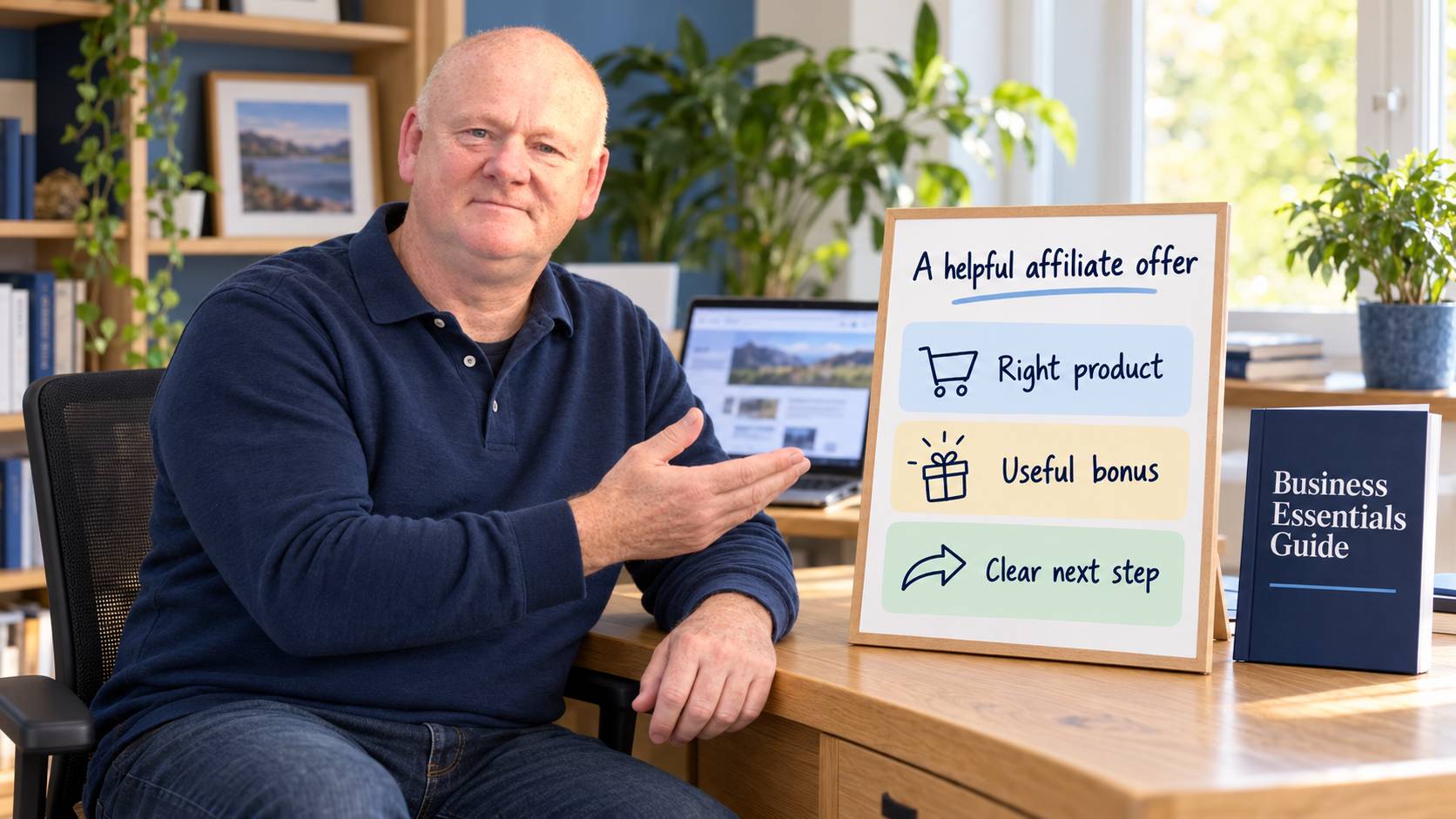
If you’re exploring affiliate marketing as a way to start an online business, you’ll soon notice something: plenty of people are recommending the same products.
The same software. The same training. Sometimes even the same promotional wording.
So why would someone choose your recommendation?
You don’t need to shout louder or promise a bigger pile of bonuses. A more useful starting point is to help someone understand whether the product fits their needs, then make it easier for them to use it.
That’s something you can build on whether you’re a complete beginner or trying again after an earlier attempt didn’t go to plan.
Let’s walk through what that looks like, and how it fits into building a business you can manage.
What is affiliate marketing, in plain English?
Affiliate marketing means recommending another business’s product or service and potentially earning a commission when someone makes a qualifying purchase through your tracked link.
You don’t have to create the main product yourself. The seller usually handles the checkout and delivery of that product, according to its terms. Your role is to attract suitable people, explain the offer accurately and help them make an informed decision.
If you promise your own bonuses or support, delivering those is your responsibility.
There’s work involved, and commissions aren’t guaranteed. You need people who value your advice, products worth recommending and a sensible way to connect the two.
Start with the buyer’s problem
A large commission can catch your attention. It tells you very little about whether a product will help your audience.
Start by asking what the person needs to achieve.
Someone building their first website may want to publish a few clear pages without getting lost in technical settings. Someone starting a newsletter may need help understanding subscriptions and writing their first welcome email.
Those are specific jobs. A useful recommendation explains how a product helps with that job, what it costs and where its limitations matter.
Before promoting anything, check:
- Who is it suitable for?
- What is included in the version you’re recommending?
- Does the buyer need extra subscriptions or upgrades?
- What will they still have to do themselves?
- What support is available if they get stuck?
Where you’ve used a product, explain what you actually did with it. Where you haven’t, be clear about the basis of your assessment. Don’t turn a sales-page claim into a story about your own experience.
Create a bonus that helps with the next step
Buying a tool doesn’t always mean knowing what to do with it.
That gap is where a relevant bonus can help.
Imagine recommending a website builder. A beginner may still wonder what pages to create, what to write on them or what to check before publishing. A short planning worksheet or launch checklist could make those decisions easier.
If you’re recommending email software, a simple welcome-email template with instructions for adapting it could be more useful than a folder containing hundreds of unrelated files.
Other possibilities include:
- A quick-start walkthrough showing a specific task.
- A worksheet that helps buyers organise their information.
- A template they can adapt to their own business.
- A troubleshooting guide for a common difficulty.
- A clearly explained example of how you used the product.
Choose one problem you can genuinely help solve. Make the bonus easy to find, understand and use. Only distribute material you created or have permission to share.
The buyer should be able to answer: “How will this help me use what I’m buying?”
Make your offer distinctive without putting people under pressure
Your own approach can give people a reason to choose you. Perhaps you explain things clearly, understand their type of business or have created a resource that addresses a problem other reviewers overlook.
That’s a stronger foundation than an artificial countdown.
If a deadline is genuine, explain it. If you can offer only a limited number of personal support sessions, say how many and what they include. Keep those limits accurate.
A discount or exclusive deal also needs to be real and authorised by the seller. Check the affiliate programme’s rules before adding incentives; some programmes restrict them.
People should have enough information and room to decide whether your recommendation suits them.
Explain the package clearly
Keep the main product and your extras easy to distinguish.
Tell readers what they’re buying from the seller, what you’re providing, who can claim the bonus and how to get it. Explain any expiry date, support limit or additional cost before they purchase.
For example:
“If you buy the qualifying plan through my link, I’ll provide my website planning worksheet and pre-launch checklist. They’ll help you organise your pages and check the basics before publishing. The website subscription is supplied by the seller; these two resources are supplied by me.”
That gives the buyer something concrete to assess.
Be careful with impressive-looking bonus values. If you haven’t genuinely sold a checklist for a particular price, don’t present that figure as its established selling price. Explain what it does and why it’s useful.
Be open about how you earn
If you may earn a commission, say so clearly alongside the recommendation, where readers can easily see it before choosing to click or buy.
Plain wording helps: “I may earn a commission if you buy through my affiliate link.”
Check the disclosure requirements that apply to your audience, location and affiliate programme. A statement hidden away in a footer may not give someone the information they need when reading an offer.
Your explanation should also cover the product’s limitations. Who might find it unsuitable? What cheaper or simpler approach might be enough for someone just starting?
Helping a reader decide to wait can be valuable advice. It shows that your recommendation has a purpose beyond getting the sale.
Make bonus delivery dependable
Before you publish the offer, test how a qualifying buyer will receive your extras.
Will delivery be automatic, or will they need to send proof of purchase? How long should they expect to wait? Where can they contact you if something goes wrong?
Explain the process on the offer page. Check that files open properly, instructions make sense and permissions allow access. Ask only for information you genuinely need, and avoid requesting sensitive payment details.
If you include personal help, define its scope. A single setup question and ongoing coaching are very different commitments.
A modest promise delivered properly gives people a better experience than an impressive package they can’t access.
Affiliate marketing still needs business foundations
It’s understandable to focus on your first commission. But a bonus page is only one part of the work.
You also need to understand your audience, choose a clear offer, reach suitable people, manage costs and keep your promises. Depending on your approach, you may need a website, email software, tracking and a way to organise your resources.
You don’t need to buy every tool at once. You do need to understand what each tool would do in your business before paying for it.
Ready-made pages and templates can help with some tasks, but they still need checking and adapting. They won’t choose the right audience for you or guarantee that people buy.
If you’re starting again, take a moment to identify what made the previous attempt difficult. Too many products? Too many channels? Unclear recommendations? A smaller, more focused plan can give you a better way to test your next idea.
Your first affiliate offer can be simple
Choose one audience, one relevant product and one useful extra.
Write a clear explanation of who the product helps, what it includes, what it costs and what the buyer needs to do. Add your commission disclosure and straightforward bonus instructions.
Then ask someone unfamiliar with the offer to read it. Can they understand it? Do they know what happens after buying? What questions are left unanswered?
Use that feedback before expanding the package.
You’re aiming to make someone’s decision easier and their next step more manageable. That gives your offer a reason to exist beyond another affiliate link.
Get your free Business Essentials Guide before buying more tools
If you’re interested in affiliate marketing but still wondering what you actually need to get started, let’s sort out the foundations first.
My free Business Essentials Guide explains the core jobs a business needs to handle, why they matter and how to think about the tools that support them. It’s written in everyday language for beginners, small business owners and people ready to try again.
It will help you approach recommendations with clearer questions: What does this do? Do I need it now? What can wait?
When you request the guide and confirm your email, you’ll also receive my free Business Notes newsletters. We’ll go deeper into individual tools, practical decisions and useful developments, so you can build your understanding one topic at a time.
There’s no requirement to buy anything, and you can unsubscribe whenever you wish. Some recommendations may earn me a commission, which I’ll disclose.
You’re welcome whether your next step is affiliate marketing, a service business or taking an existing small business online. Start with the essentials, then build from there.