Traffic matters because people cannot respond to an offer they never see. But getting visitors is only one part of the job. You also need a clear message, a useful next step, and a way to follow up with people who are not ready to buy today.
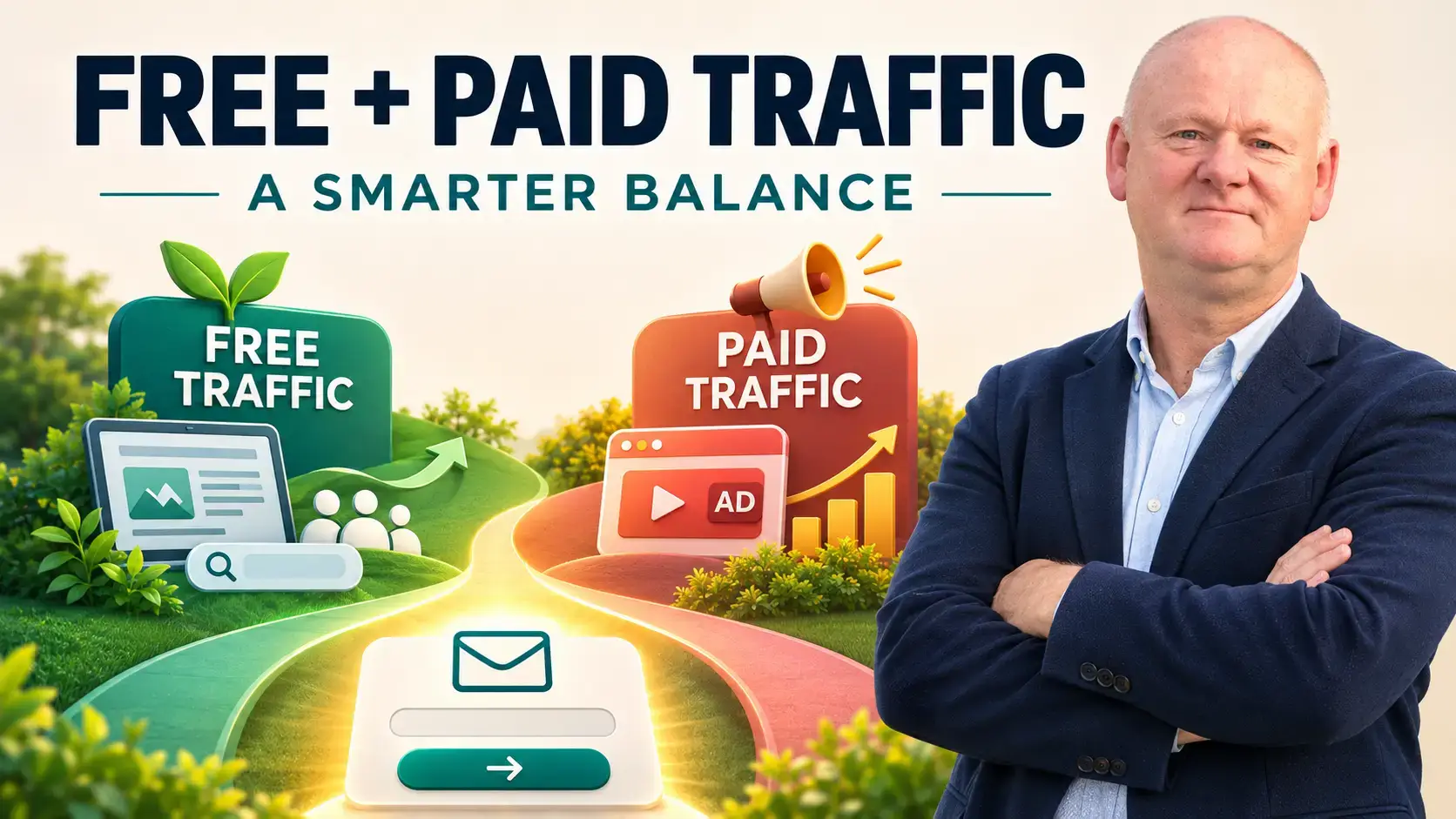
That is why the choice between free and paid traffic is rarely an either-or decision. Organic activity can build familiarity and useful assets over time. Paid campaigns can help you reach a defined audience sooner and test an idea with measurable results. Used together, they can support a more dependable marketing process.
The right balance depends on your time, budget, experience, offer and funnel. This guide shows you how to make that decision step by step, keep your spending controlled, and learn from the numbers rather than guess.
First, understand what each kind of traffic can do
Free traffic usually means visits earned through the work you publish or the relationships you build: search-friendly blog posts, helpful social content, YouTube videos, community participation, referrals and your email newsletter. It has no direct charge for each visitor, but it does require time, consistency and sometimes tools or production costs.
Its main strength is compounding value. A helpful article or video can continue to answer questions and bring people to your site after you publish it. Repeated useful content can also help people understand your approach before they consider an offer. Results are uncertain, though, and often take time. Publishing more does not guarantee reach or sales.
Paid traffic is exposure you purchase, such as search or social ads, sponsored placements, or carefully selected email advertising. It can bring visitors quickly and lets you test a specific audience, message or landing page. In return, you take on a direct cost. Campaigns can lose money, and access to an audience stops when you stop paying unless you have earned a continuing relationship, such as an email subscriber.
Neither source fixes a weak offer or confusing page. Both work better when the visitor understands what is being offered, why it may help, and what to do next.
Build the destination before you buy visitors
Before paying for traffic, make sure the path from first click to next step is ready. A simple beginner funnel might include:
- A specific audience and problem. Know who the page is for and what question or challenge it addresses.
- A useful page. Explain the value clearly, make the call to action easy to find, and check the page on a phone.
- A relevant next step. This could be a practical free guide, a short email course, a product comparison or a direct offer, depending on the visitor’s intent.
- Follow-up. If someone opts in, send what you promised and continue with useful, relevant emails. Do not assume every subscriber is ready to buy immediately.
- Measurement. Record where visitors came from and what they did, while respecting privacy and applicable consent requirements.
Test every link and form yourself. Check that the promised download arrives, the page loads properly on mobile, and tracking records the action you care about. Sending paid visitors into a broken or unfinished funnel makes the learning expensive.
Use organic content to learn what your audience cares about
You do not need to be everywhere. Choose one main publishing channel you can sustain, then repurpose its strongest ideas where it makes sense. If writing is comfortable, start with useful blog posts and email. If you prefer speaking, try short videos or longer tutorials. If you enjoy visual explanations, use image-led posts or carousels.
Start with real questions your intended readers ask. A useful post can explain a process, compare approaches, point out a common mistake, or help someone decide what to do next. Make each piece clear enough to stand on its own. Then connect it naturally to a relevant guide, signup page or product review.
Organic content also gives you clues for paid testing. Notice which topics earn thoughtful replies, saves, email signups or meaningful clicks. Those signals do not prove an ad will work, but they can help you choose a message worth testing. Treat audience response as evidence to investigate, not a guarantee of sales.
Add paid traffic as a measured experiment
Paid advertising is easiest to manage when each campaign answers a question. For example: will this audience respond to this guide? Does this headline bring qualified visitors? Do people who reach the page subscribe?
Before launching, check the advertising platform’s current rules for your offer, claims, landing page and targeting. Affiliate offers and income-related claims can receive extra scrutiny. Be accurate, disclose affiliate relationships where required, and do not imply that typical results are guaranteed.
Set a test budget you can afford to lose, and decide on a spending limit and review point before the campaign starts. Begin with one audience, one clear objective and a small number of creative variations. Avoid changing several parts at once; otherwise you will not know what caused a difference.
For a new campaign, the first objective may be learning rather than immediate profit. Check that the right people are seeing the ad, that clicks reach the intended page, and that the page produces the action you set out to measure. Pause or revise a test when it reaches your pre-set limit without useful evidence. Do not keep increasing spend simply because you have already spent money.
Choose the balance that fits your current stage
There is no universal percentage that every marketer should spend on free and paid traffic. A sensible mix changes with your resources and what you have already learned.
- If your budget is very limited: Put most effort into a sustainable publishing routine, audience research and a simple email follow-up. You can still study advertising and prepare tracking without launching a campaign.
- If you have a small test budget: Keep publishing useful content while running one controlled paid test to a relevant page or lead magnet. Set a firm cap and review the full visitor journey.
- If a campaign has repeatable results: Increase spend gradually, monitoring lead quality and sales as well as cost. Keep improving your content and customer understanding so the business does not depend on one ad or platform.
Think in terms of available time and money. If you have more time than cash, put more effort into organic content. If you have a budget but little spare time, paid exposure may help you test demand, but you still need a sound page and follow-up. If you have neither, simplify the plan and focus on the smallest useful action you can repeat.
Track the numbers that lead to decisions
Likes and impressions can show that content is being seen, but they do not tell the whole story. Track the steps between a visitor and the business result you want. A basic spreadsheet can include:
- Traffic source and campaign name
- Spend, clicks and landing-page visits
- Email signups and cost per signup
- Qualified actions, such as guide downloads or product-page visits
- Sales, refunds and commission actually received
Use consistent date ranges and make sure your tracking is working before drawing conclusions. A low cost per signup is not automatically good if the subscribers are not interested in the topic. A sale does not automatically mean a campaign is profitable once advertising costs, refunds and other expenses are considered.
For a simple calculation, divide advertising spend by the number of confirmed leads to estimate cost per lead. To assess a campaign’s direct return, compare the commission received with the advertising spend over the same period. If you spend £40 and receive £30 in commission, you have not covered the ad spend, even if the campaign generated clicks or signups. Email follow-up may produce later sales, but count them only when they happen and attribute them carefully.
Use these figures to decide whether to continue, change one part of the funnel, or stop the test. Give people reasonable time to act, but set the review period in advance so the decision does not drift.
Common mistakes to avoid
- Expecting instant organic results. Search visibility and audience trust usually need sustained work, and outcomes are never guaranteed.
- Buying traffic before the page is ready. Fix unclear copy, broken forms and missing follow-up before paying to send people there.
- Promoting too many offers at once. A focused message helps you learn what your audience responds to.
- Judging ads by clicks alone. Clicks matter only if they come from relevant people and lead to meaningful actions.
- Scaling after one good day. Small samples fluctuate. Look for repeatable evidence across a reasonable period.
- Relying on one traffic source. Platforms change. Build direct relationships with your audience and keep developing more than one way to be discovered.
- Making income promises. Be honest about uncertainty, costs and the work involved. Other people’s outcomes do not predict a reader’s results.
A simple 30-day starting plan
- Week 1: Set the foundation. Choose one audience problem, one relevant offer or lead magnet, and one main publishing channel. Check your page, form, follow-up and links.
- Week 2: Publish and listen. Share a useful piece of content and invite a clear next action. Pay attention to the questions and objections people raise.
- Week 3: Improve the path. Refine the page or email based on what you observed. Confirm that your measurement captures visits, signups and sales correctly.
- Week 4: Decide whether to test paid traffic. If the funnel is working and you have an affordable test budget, run one small campaign with a defined goal and stop point. Otherwise, continue building the organic foundation and prepare the test for later.
At the end of the month, review what you learned: which topic drew the right people, where visitors dropped off, what questions remain, and whether the numbers justify another test. Your next step should follow that evidence.
Build a traffic system one step at a time
Free traffic can help you publish useful resources and earn attention over time. Paid traffic can put a clear message in front of a selected audience and provide faster feedback. The strongest plan gives each source a job, connects visitors to a helpful next step, and measures what happens after the click.
You do not need to master every platform before you begin. Choose a reader, make something useful, give them a clear next step, and improve the process with what you learn. Keep the budget controlled and the promises realistic.
If you are putting the foundations of an online business together, you can also explore my free Business Essentials Guide for practical starting points on building your business, audience and marketing process.
Affiliate disclosure: Some links on this site may be affiliate links. If you buy through one, I may earn a commission at no extra cost to you. I only aim to recommend products relevant to the topic, and you should check that any product suits your needs before purchasing.